1800
30,000,000
Population stable
1800 1850 1900
1800

A Vast Ocean of Buffalo

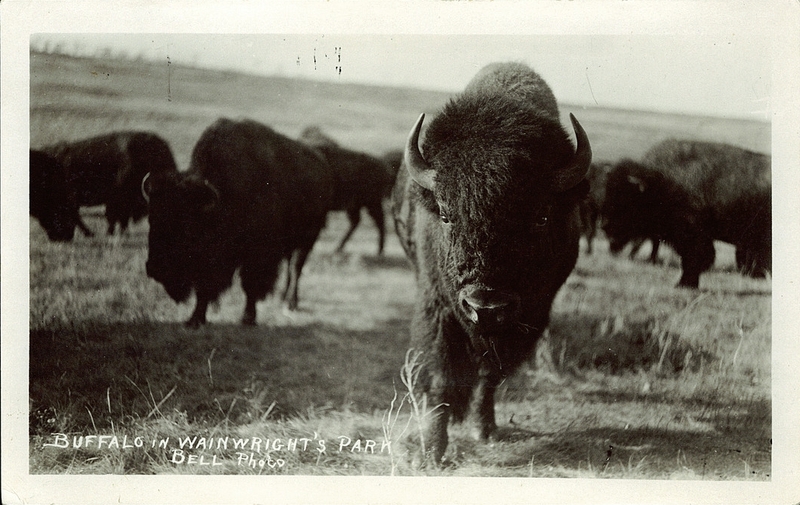
A herd of plains buffalo at Buffalo National Park, Wainwright, Alberta, early 1900s
A herd of plains buffalo at Buffalo National Park, Wainwright, Alberta. The survivors of near-extinction, gathered in a protected sanctuary. (Bell Photo)

Tens of millions of buffalo covered the plains from Alberta to Texas [1]. For the Métis, the buffalo was everything: food, clothing, shelter, trade goods. The hunt was communal, organized, and sustainable. It had been that way for generations [2].

1825

The Fur Trade Intensifies

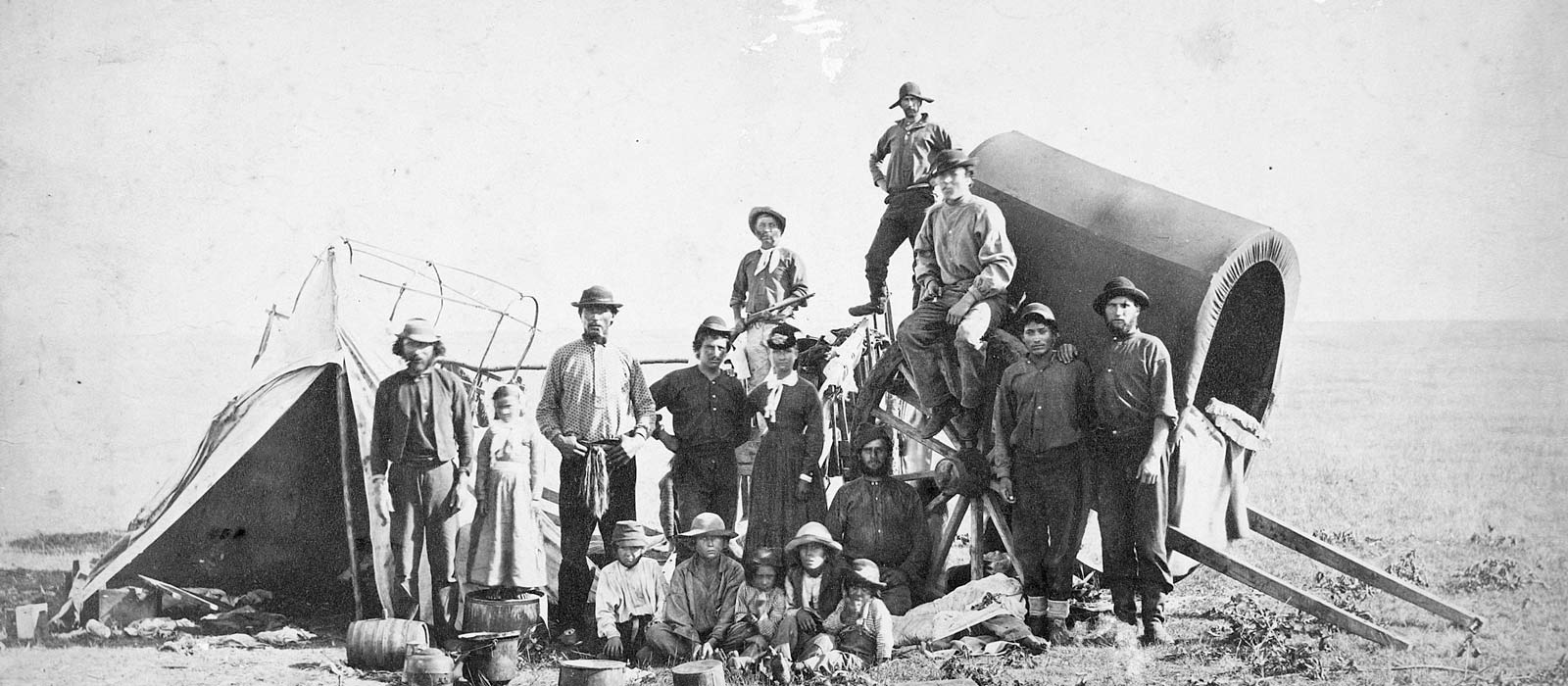
Métis freighting brigade with Red River cart and canvas lodge on the open prairie
A Métis freighting brigade on the open prairie. The Red River cart and canvas lodge were the backbone of the fur trade economy. (Library and Archives Canada)

The Hudson's Bay Company and North West Company competed for control of the plains [3]. Métis freighters and hunters became the backbone of the trade. Pemmican: dried buffalo meat mixed with fat: fed the fur trade. The buffalo economy was booming, but the pressure was building [3].

1850

The Hide Trade Takes Off

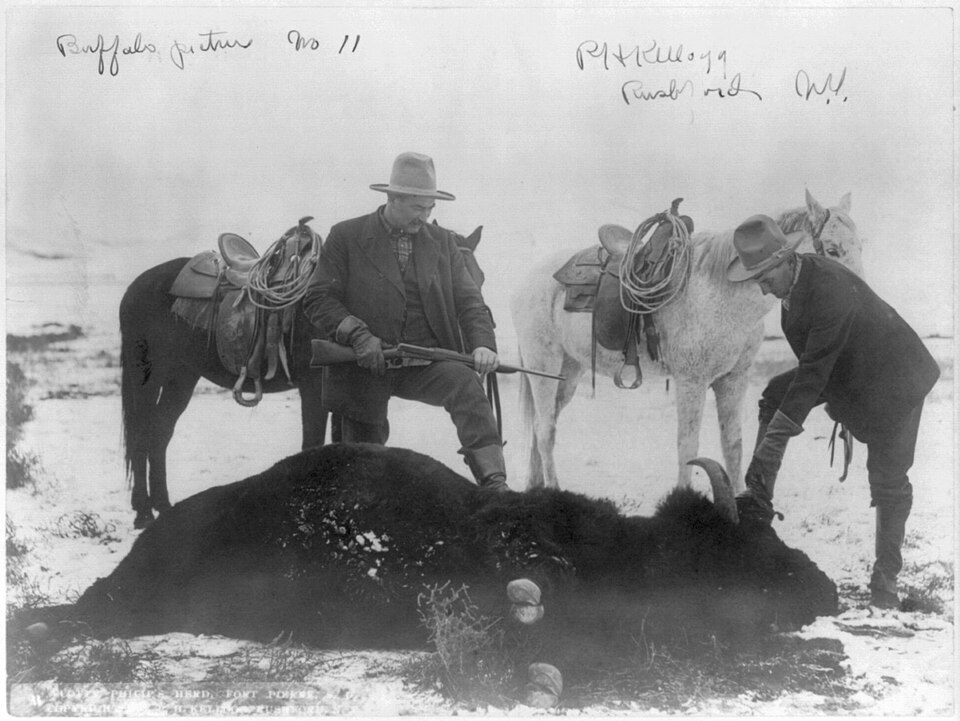
Hunters standing over dead buffalo, Scotty Philip's herd, Fort Pierre, South Dakota
Hunters with the carcasses of buffalo, Fort Pierre, South Dakota. (LCCN 2006689761)

Commercial hunting for buffalo robes expanded east. For every robe that made it to market, several more buffalo were killed and left in the sun [3]. The trade obscured the true death toll. By the 1870s, the robe trade peaked at 250,000 per year [3].

1865

Railroads Reach the Plains

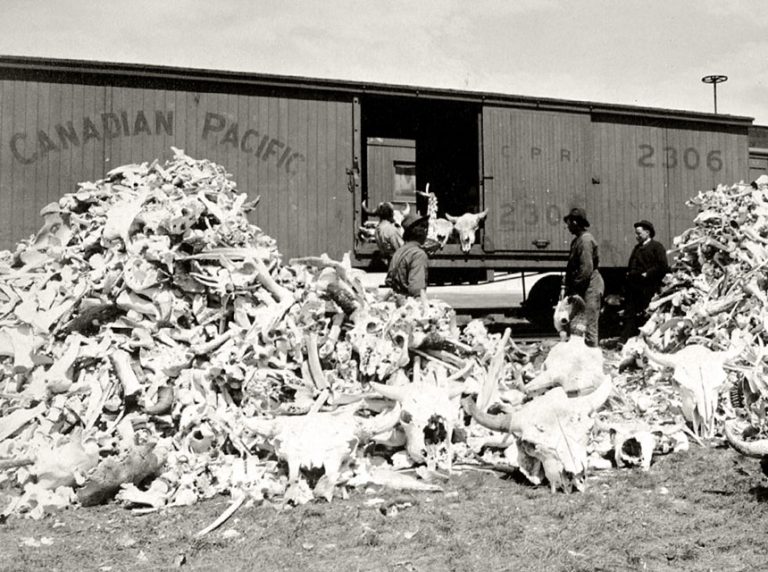
Canadian Pacific boxcar loaded with buffalo bones on the prairie
The railroad made mass transport of hides and bones profitable. A Canadian Pacific boxcar loaded with buffalo bones on the plains, late 1880s.

Railroads made mass slaughter possible. Hunters fired from train windows, leaving carcasses to rot [3]. The bone trade shipped tons of remains east for fertilizer and sugar refining [3]. The AT&SF depot at Dodge City shipped 200,000 hides per year [3].

1870

The Great Collapse

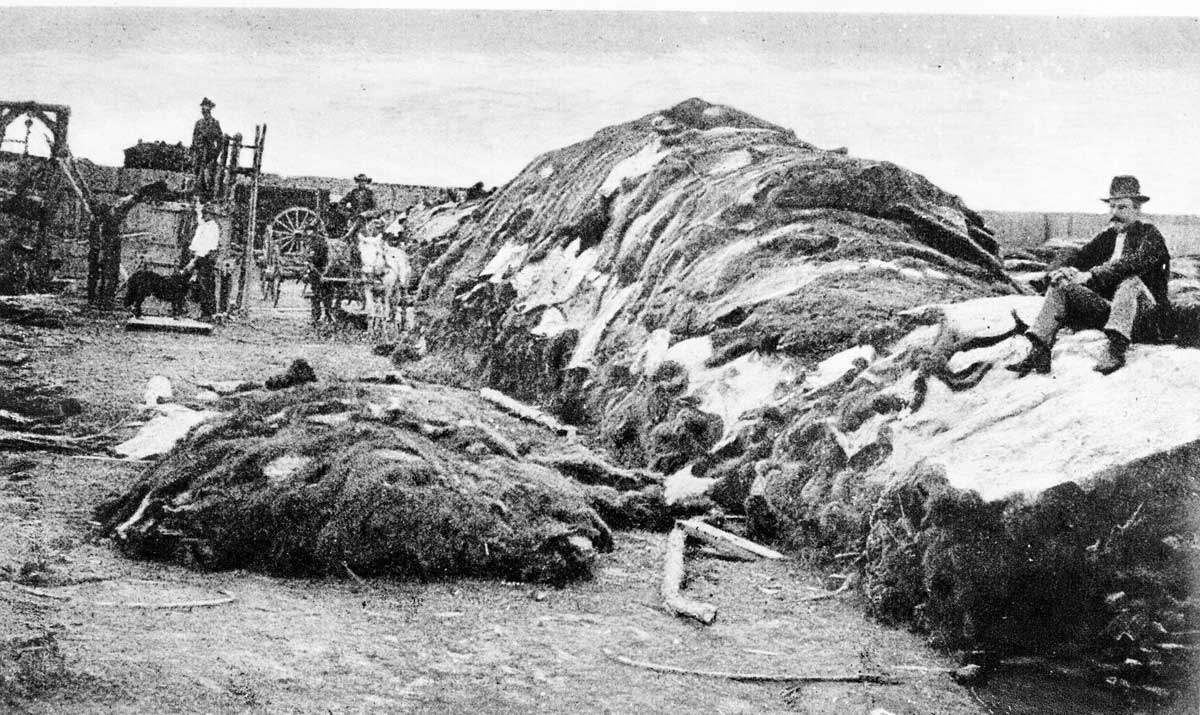
Rath & Wright's buffalo hide yard in 1878, showing 40,000 buffalo hides, Dodge City, Kansas
Rath & Wright's buffalo hide yard, 1878, 40,000 buffalo hides, Dodge City, Kansas.

The population crashed from millions to hundreds of thousands in just a few years. Métis communities faced starvation as the buffalo economy vanished [4]. In 1874, the U.S. Army openly championed killing buffalo to force Indigenous nations onto reservations. Gen. Philip Sheridan told Congress: "Let them kill, skin, and sell until the buffalo are exterminated" [3].

1880

Picking the Bones Clean

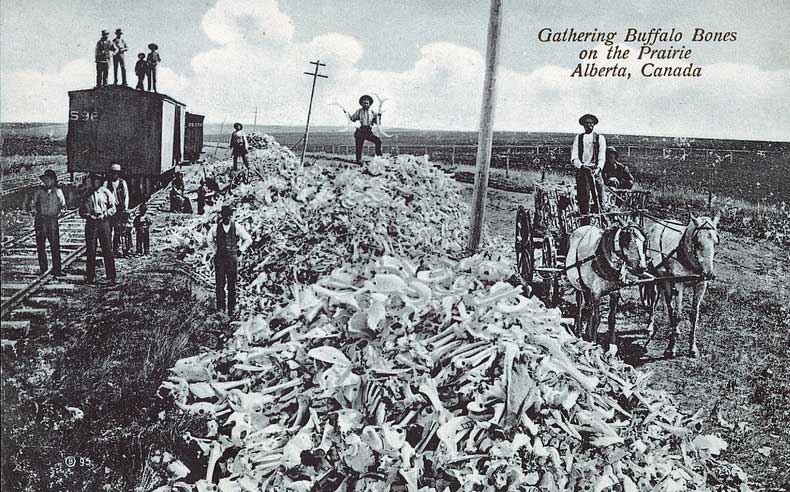
Gathering Buffalo Bones on the Prairie, Alberta, Canada
Gathering Buffalo Bones on the Prairie, Alberta, Canada.

With the herds gone, a new industry rose: bone picking [3]. Settlers and Indigenous people gathered bleached skeletons from the prairie. The CPR shipped boxcars full of bones east to Regina (the "Pile of Bones"), Moose Jaw, and Medicine Hat [5]. The bones became fertilizer, bone char, and buttons. Nothing was wasted except the buffalo itself [3].

1889

The Last of the Herds

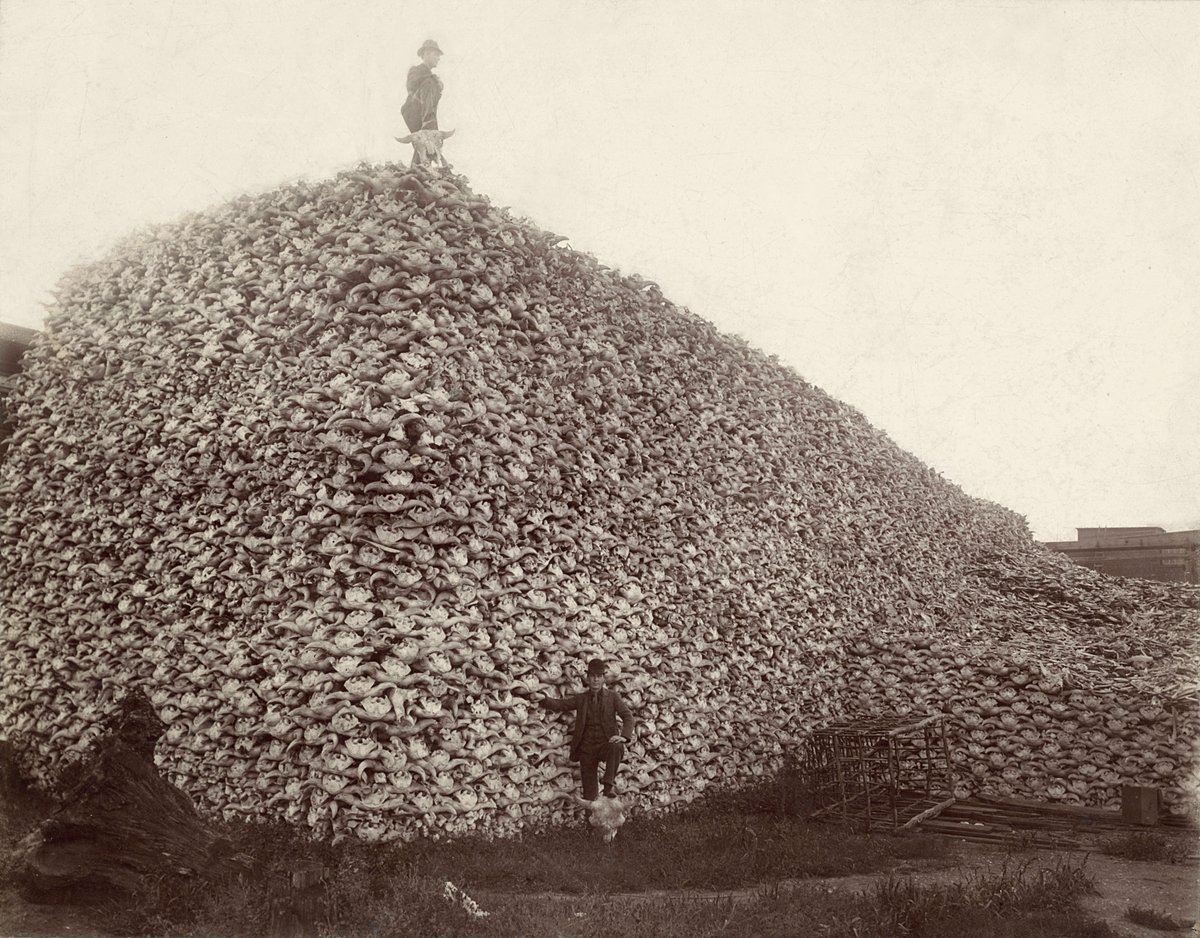
Pile of bison skulls from the 1870s
The skulls told the story the living no longer could.

William Temple Hornaday's 1889 Smithsonian report documented the final toll: fewer than 1,000 buffalo remained in the wild [6]. The species was functionally extinct. The Métis homeland was shattered. The plains were silent [4].

1900

Functionally Extinct

Stack of buffalo skulls at railway siding, Saskatchewan, ca. 1890
Stack of buffalo skulls at a railway siding, Saskatchewan, ca. 1890. (Glenbow Museum)

By 1900, roughly 500 buffalo remained, scattered in private herds and a small wild population in Yellowstone [6]. In a single lifetime, the most abundant large mammal in North America had been reduced to nearly nothing.

The Métis lost their economy, their food sovereignty, and the foundation of their way of life [4]. The plains were opened for settlement. The destruction was the point [3].

Conservation efforts in the early 1900s brought the species back from the brink. Today, roughly 500,000 buffalo exist. Most are in commercial herds. A few wild, free-roaming populations remain.

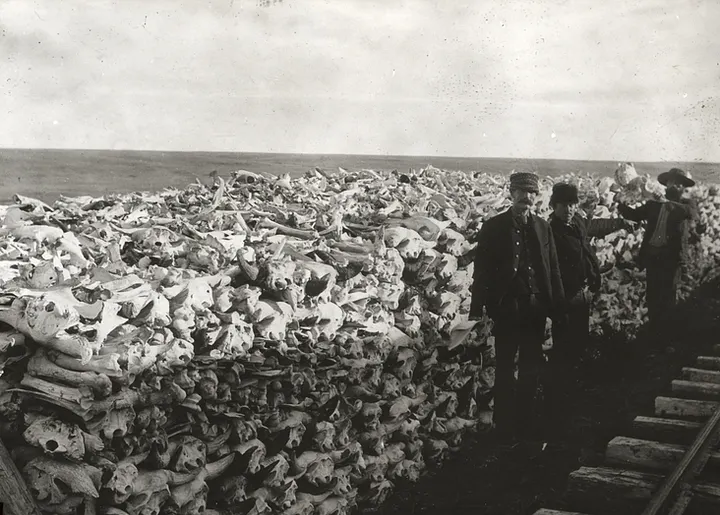
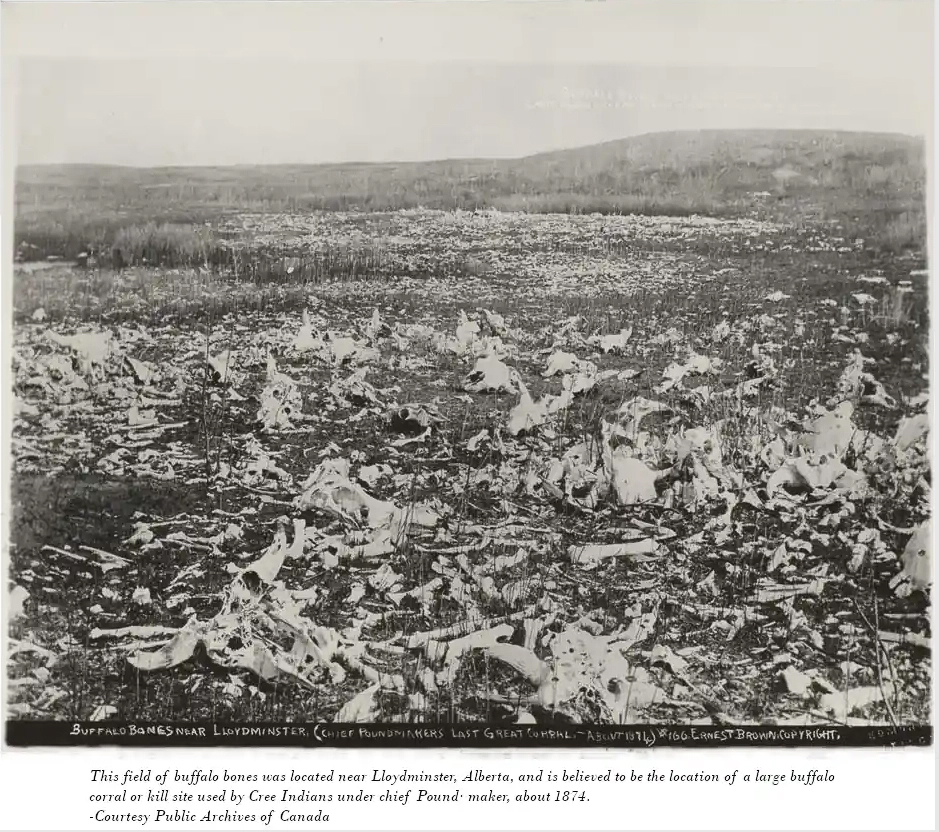
Field of buffalo bones near Lloydminster, Saskatchewan, at Chief Poundmaker's last great corral, ca. 1874
Buffalo bones near Lloydminster, Saskatchewan — Chief Poundmaker's last great corral, ca. 1874. The sea of bone stretches to the horizon. (Ernest Brown, copyright)